
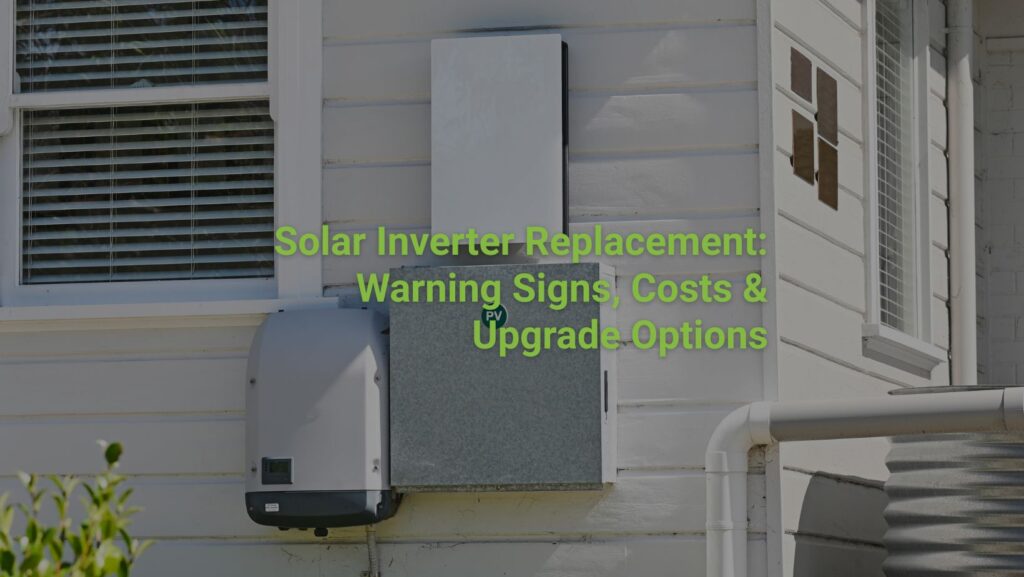
Your solar inverter is the heart of your solar energy system. Without it, your solar panels can’t convert sunlight into usable electricity for your home or business.
But like any technology, inverters don’t last forever.
Knowing when you need a solar inverter replacement can save you from rising electricity bills, reduced energy production, and costly system failures.
This guide explains the key warning signs, replacement costs, and upgrade options so you can keep your solar system running at peak performance.
Quick Answer: When Should You Replace a Solar Inverter?
Most solar inverters last between 10–15 years. Common signs you may need a solar inverter replacement include:
- Frequent shutdowns
- Error messages
- Reduced solar output
- Higher electricity bills
- Physical damage or corrosion
Key Takeaways
- Solar inverters are critical to system performance
- Most inverters need replacement after 10–15 years
- Reduced energy output is a major warning sign
- Upgrading your inverter can improve efficiency and monitoring
- Modern inverters offer smarter energy management features
What Does a Solar Inverter Do?
A solar inverter converts:
- DC electricity generated by solar panels
into - AC electricity used by your appliances and electrical system
Without a functioning inverter, your solar system cannot power your property effectively.
Key Roles of a Solar Inverter:
- Power conversion
- Grid synchronization
- System safety management
- Energy monitoring and optimization
A healthy inverter ensures your solar energy system runs efficiently and safely.
How Long Do Solar Inverters Last?
Most solar inverters have a lifespan of:
- 10–15 years for standard string inverters
- Longer for premium or microinverter systems
However, several factors affect longevity.
Factors That Impact Inverter Lifespan:
- Installation quality
- Heat and weather exposure
- Ventilation
- System load and usage
- Regular maintenance
Proper maintenance and monitoring can help extend the life of your inverter significantly.
Warning Signs You Need a Solar Inverter Replacement
Recognizing problems early can prevent major energy losses.
1. Frequent Shutdowns
If your inverter regularly turns off or disconnects, it may indicate:
- Internal faults
- Overheating
- Grid communication issues
2. Error Messages or Fault Codes
Modern systems display warning notifications when problems occur.
Common issues include:
- Voltage faults
- Communication errors
- Ground faults
Persistent error messages usually mean professional inspection is needed.
3. Reduced Solar Energy Output
One of the biggest warning signs is declining system performance.
Signs Include:
- Lower solar production
- Increased reliance on grid electricity
- Higher electricity bills
Monitoring apps can help identify sudden drops in output.
4. Physical Damage or Corrosion
Visible wear often indicates internal deterioration.
Look for:
- Rust or corrosion
- Cracks or water damage
- Burn marks or discoloration
Environmental exposure is a common cause of inverter failure.
5. Unusual Noises
Buzzing, clicking, or hissing sounds may indicate:
- Electrical faults
- Failing components
- Cooling system issues
A healthy inverter should operate quietly.
Common Causes of Solar Inverter Failure
Several issues can shorten inverter lifespan.
Most Common Causes:
- Overheating due to poor ventilation
- Moisture and humidity damage
- Incorrect installation
- Power surges or electrical faults
- Age-related component failure
Routine servicing can help identify these issues before they become serious.
Repair vs Solar Inverter Replacement: Which Is Better?
Sometimes repairs are possible—but not always cost-effective.
When Repairs Make Sense:
- Minor faults
- Newer inverter models
- Warranty coverage available
When Replacement Is Better:
- Inverter is over 10 years old
- Frequent recurring faults
- Major internal damage
- Repair costs approaching replacement cost
Upgrading often improves system efficiency and reliability long-term.
Solar Inverter Replacement Cost
The cost of solar inverter replacement depends on:
- Inverter type
- System size
- Installation requirements
- Brand and features
Typical Cost Factors:
- New inverter unit
- Labour and installation
- Electrical upgrades if required
- Monitoring system integration
Premium smart inverters may cost more upfront but deliver better performance and monitoring.
Best Solar Inverter Upgrade Options
Modern inverters offer major improvements over older systems.
1. String Inverters
Best for:
- Standard residential systems
- Roofs with minimal shading
2. Microinverters
Best for:
- Complex roof layouts
- Shaded panels
- Maximum panel optimization
3. Hybrid Inverters
Best for:
- Battery storage integration
- Future energy upgrades
Hybrid systems allow you to:
- Store excess solar energy
- Improve backup power capabilities
- Increase energy independence
Advanced Features in Modern Solar Inverters
Today’s inverters offer smarter technology and better energy management.
Popular Features:
- Mobile app monitoring
- Real-time energy tracking
- Battery compatibility
- Smart home integration
- Improved energy efficiency
These upgrades help maximize your solar investment.
Why Professional Installation Matters
A solar inverter replacement should always be completed by a licensed professional.
Benefits of Professional Installation:
- Safe electrical work
- Warranty protection
- Compliance with Australian standards
- Optimized system performance
Improper installation can reduce efficiency and create safety risks.
How to Maximize Performance After Replacement
To get the most from your new inverter:
Maintenance Tips:
- Schedule regular inspections
- Keep ventilation areas clear
- Monitor energy production regularly
- Address faults immediately
Preventive maintenance extends system life and improves reliability.
FAQs About Solar Inverter Replacement
How often should solar inverters be replaced?
Most require replacement after 10–15 years.
Can I upgrade my inverter without replacing solar panels?
Yes. In many cases, the inverter can be upgraded independently.
How do I know if my inverter is failing?
Common signs include reduced output, error messages, shutdowns, and rising energy bills.
Are modern solar inverters more efficient?
Yes. New models offer better efficiency, monitoring, and battery integration.
Conclusion
Your inverter is one of the most important components of your solar energy system.
Recognizing the signs of inverter failure early can help you avoid energy losses, improve system performance, and future-proof your solar setup.
Whether you need a simple replacement or a complete upgrade, investing in the right inverter ensures your solar system continues delivering maximum value.
Get Expert Solar Inverter Replacement Services
Not sure if your inverter needs replacing?
We’ll inspect your solar system, identify performance issues, and recommend the best solar inverter replacement option for your home or business.
Why Choose Us?
✅ Licensed solar electricians
✅ Expert fault diagnosis
✅ High-performance inverter upgrades
✅ Safe and compliant installation
✅ Honest advice and transparent pricing
Whether your inverter is failing, outdated, or underperforming, we’ll help restore your system’s efficiency and reliability.
👉 Learn more about our services: /what-we-do/
👉 Request your solar inverter assessment today: /contact-us/
Protect your solar investment with a professional solar inverter replacement.