
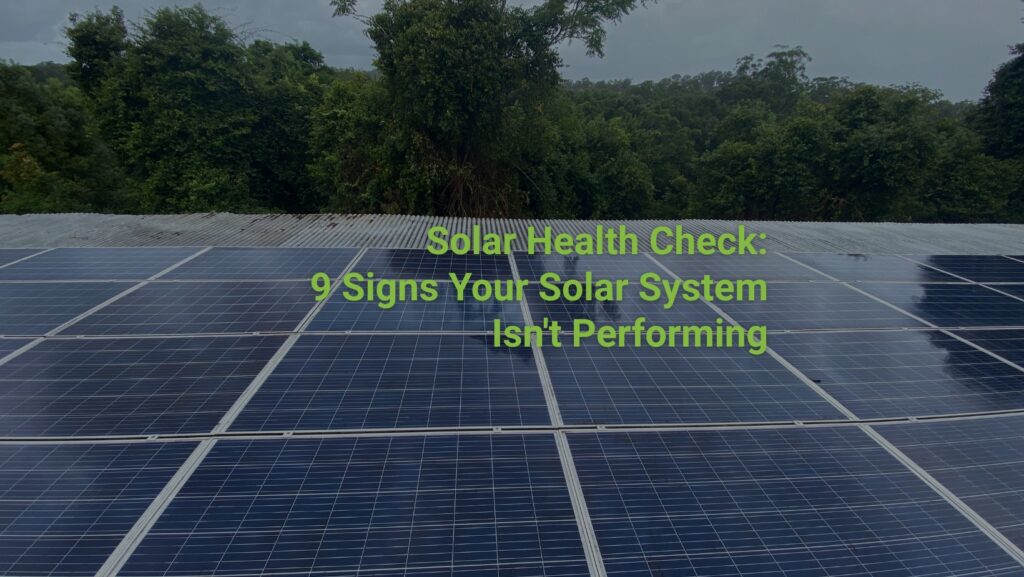
Solar Health Check
Installing solar panels is one of the best ways Brisbane homeowners can reduce electricity bills and improve energy efficiency. However, like any electrical system, solar installations can develop faults, experience wear and tear, or simply become less efficient over time.
The challenge is that many solar system issues aren’t immediately obvious. Your panels may still appear to be working while generating significantly less power than they should.
A professional solar health check can identify hidden problems before they become costly repairs. If you’ve noticed higher power bills or reduced energy savings, your solar system may not be performing at its full potential.
Here are nine common warning signs that it’s time to book a solar health check.
1. Your Electricity Bills Are Increasing
One of the first signs of a poorly performing solar system is an unexpected increase in electricity bills.
While seasonal changes can affect solar production, a sudden spike in energy costs may indicate:
- Reduced solar panel output
- Inverter faults
- Damaged wiring
- Shading issues
- System degradation
If your household energy usage hasn’t changed but your bills have increased, it’s worth investigating.
2. Your Solar Inverter Is Displaying Error Messages
The inverter is the heart of your solar system. It converts the DC electricity generated by your solar panels into usable AC electricity for your home.
Warning signs include:
- Error codes on the display
- Flashing warning lights
- Frequent shutdowns
- Communication failures
- No display at all
Many homeowners ignore inverter alerts because the system appears to continue operating. However, inverter issues can significantly reduce energy production.
3. Solar Production Is Lower Than Previous Years
Solar systems naturally experience minor performance reductions over time. However, substantial drops in output should not be ignored.
Compare your current generation figures to previous years. If production has noticeably declined without any obvious reason, your system may require inspection.
Common causes include:
- Panel degradation
- Dirty solar panels
- Inverter problems
- Faulty isolators
- Wiring faults
4. Your Monitoring App Shows Reduced Generation
Most modern solar systems include monitoring software that tracks energy production.
Check for:
- Sudden drops in daily generation
- Missing data
- Significant differences compared to previous months
- Reduced feed-in exports
Monitoring apps can often reveal performance issues before they become visible through higher electricity bills.
5. Your Solar Panels Look Dirty or Damaged
Brisbane’s weather can expose solar panels to:
- Dust
- Bird droppings
- Leaf debris
- Storm damage
- Hail impacts
While rain helps clean panels, heavy dirt build-up can reduce solar output.
During a visual inspection, look for:
- Cracked glass
- Discolouration
- Water ingress
- Burn marks
- Debris accumulation
If you notice visible damage, arrange a professional assessment immediately.
6. New Trees or Structures Are Creating Shade
Solar panels perform best when exposed to direct sunlight.
Even partial shading can significantly impact energy production.
Common causes include:
- Tree growth
- New neighbouring buildings
- Roof extensions
- Satellite dishes
- Antennas
What may have been an ideal solar installation five years ago could now be experiencing substantial shading losses.
7. Your System Is More Than 10 Years Old
Older solar systems often remain functional but may not perform as efficiently as newer technology.
Components that commonly require attention include:
- Inverters
- Isolators
- Connectors
- Cabling
Many solar inverters have a lifespan of approximately 10–15 years, making regular inspections increasingly important as systems age.
8. You Hear Buzzing or Notice Burning Smells
Solar systems should operate quietly and safely.
Warning signs requiring immediate attention include:
- Burning smells
- Crackling sounds
- Buzzing noises
- Hot electrical components
- Discoloured isolators
These symptoms may indicate electrical faults that could present safety risks.
If you notice any of these issues, contact a licensed electrician or solar technician immediately.
9. You’re Not Getting the Savings You Expected
Many homeowners install solar expecting significant reductions in power bills.
If your savings are lower than expected, a solar health check can identify factors such as:
- Incorrect system sizing
- Poor installation quality
- Underperforming panels
- Inverter inefficiencies
- Energy usage changes
A detailed assessment can often uncover simple improvements that increase system performance.
What Does a Solar Health Check Include?
A professional solar health check typically involves:
Visual Inspection
Checking solar panels, mounting systems, wiring, and electrical components.
Inverter Assessment
Reviewing inverter performance, error logs, and operating efficiency.
Electrical Testing
Testing voltages, connections, and safety devices.
Performance Analysis
Comparing actual energy generation against expected output.
Safety Inspection
Checking isolators, switchboards, cabling, and compliance requirements.
Recommendations
Providing advice on repairs, maintenance, upgrades, or optimisation opportunities.
How Often Should You Have a Solar Health Check?
For most Brisbane homes, a professional solar health check every 2–3 years is recommended.
You should arrange an inspection sooner if:
- Your electricity bills increase unexpectedly
- The inverter displays fault codes
- Your system is over 10 years old
- Storms have recently damaged your property
- You notice a drop in solar generation
Regular inspections can help maximise energy savings and extend the life of your solar investment.
Frequently Asked Questions
How do I know if my solar panels are working properly?
The easiest way is to review your monitoring app and compare current performance with previous years. A solar health check can confirm whether your system is operating correctly.
Do solar panels need maintenance?
Solar panels generally require minimal maintenance, but regular inspections help identify dirt build-up, damage, shading, and electrical issues.
How long do solar systems last?
Most solar panels are designed to last 25 years or more. Inverters and electrical components may require replacement earlier.
Can a faulty inverter reduce solar output?
Yes. Inverter issues are one of the most common causes of reduced solar performance and lower energy savings.
Is a solar health check worth it?
Absolutely. A solar health check can identify faults early, improve system performance, increase savings, and prevent expensive repairs.
Book a Solar Health Check with AIS Electrical
If your solar system isn’t delivering the savings you expected, a professional solar health check can identify the cause and help restore performance.
Whether you’re experiencing reduced generation, inverter faults, or simply want peace of mind, the team at AIS Electrical can assess your system, identify any issues, and recommend the most effective solution.
Contact AIS Electrical today to book your solar health check and ensure your solar investment is working as hard as it should.