
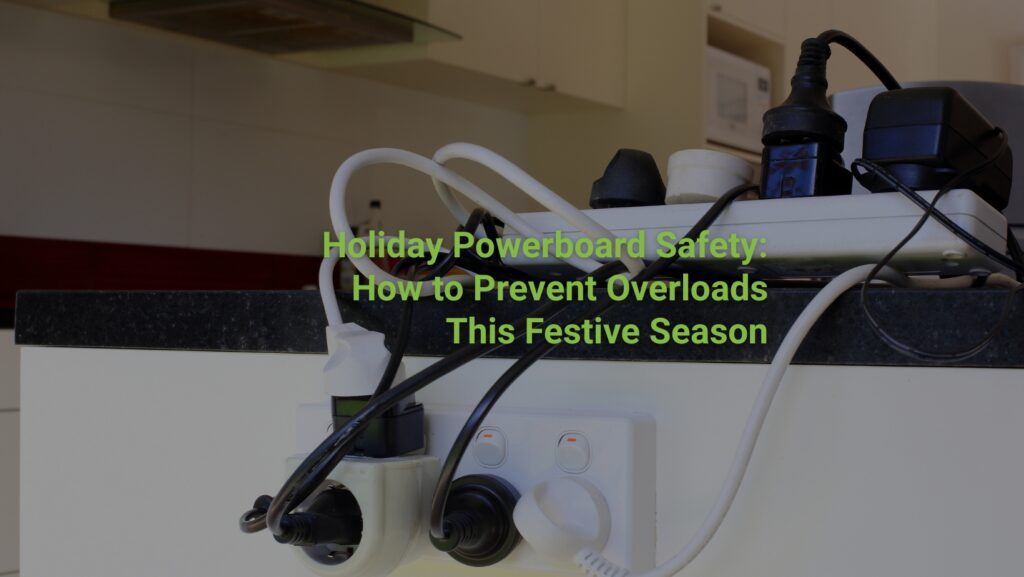
Holiday Powerboard Safety
The holiday season brings joy, gatherings, and plenty of decorations—but it also brings a surge in electricity use. With extra lights, devices, and festive displays, powerboards often bear the brunt, making overloads a common and dangerous issue.
Overloading powerboards can lead to overheating, electrical fires, and property damage. Understanding how to use powerboards safely is essential for keeping your home safe and your celebrations stress-free.
This guide will provide practical electrical safety tips to help you avoid overloading powerboards and protect your home this holiday season.
Why Electrical Safety Matters During the Holidays
The demand on your electrical system increases dramatically at this time of year. Christmas trees, inflatable décor, fairy lights, kitchen appliances, and heating or cooling systems all add to the load.
Holiday electrical hazards often happen due to:
- Excess plug-in decorations
- Older wiring unable to handle peak loads
- Multiple devices on the same outlet or circuit
- Using powerboards incorrectly
A little planning and safety awareness can prevent electrical fires and ensure your home stays bright and safe.
Understanding Powerboards and Their Limits
Powerboards (or power strips) make it easy to plug in multiple devices—but they are not designed for heavy loads.
Key safety rules:
- Check the load rating: Most powerboards can handle between 2,300–2,400W.
- Avoid high-wattage appliances: Never plug heaters, kettles, air fryers, or microwaves into a powerboard.
- Choose surge-protected boards: These help protect against voltage spikes.
- Avoid overfilling: More outlets doesn’t mean more capacity.
Knowing your powerboard’s limits is the first step in preventing overloads.
Common Causes of Powerboard Overload
Powerboard overloads often happen because of simple mistakes, especially during the holidays.
Common causes include:
- Plugging in too many devices
- Daisy-chaining (connecting multiple powerboards together)
- Using powerboards permanently instead of adding more outlets
- Ignoring the wattage limit
- Mixing low-wattage lights with high-wattage appliances
Being aware of these risks helps you prevent potentially serious electrical hazards.
Dangers of Overloading Powerboards
Overloading a powerboard can cause:
- Overheating, melting, or burning
- Electrical fires, especially around curtains or Christmas trees
- Breaker trips that shut off power abruptly
- Damage to appliances
- Sparks, buzzing, or smoke from outlets
These dangers are more common than people realise. The good news? They’re preventable with simple safety habits.
Essential Electrical Safety Tips for the Holiday Season
Keep your home safe during the festivities with these easy but important precautions:
- Use LED lights—they use less energy and produce less heat
- Avoid plugging high-demand decorations into a single powerboard
- Turn off lights and décor when leaving home or going to bed
- Use timers or smart plugs for safer energy management
- Never cover powerboards or cords with rugs or furniture
- Inspect all lights, cords, and plugs for damage before use
A few minutes of checking can prevent major hazards.
How to Safely Set Up Holiday Decorations
A safe setup is key to avoiding overloaded circuits and powerboards.
Follow these holiday decoration safety tips:
- Spread lights and décor across multiple outlets
- Keep extension cords visible and away from walkways
- Use outdoor-rated lights for all external setups
- Keep cords away from kids, pets, or heat sources
- Avoid clustering too many plugs into one spot
A thoughtful layout ensures both beauty and safety.
Choosing the Right Powerboard for Your Needs
Not all powerboards are created equal—choose wisely.
Look for:
- Overload protection switch
- Built-in surge protection
- Spaced outlets for bulky plugs
- Safety certifications (e.g., AS/NZS)
Avoid cheap, unbranded powerboards, especially during high-load seasons like Christmas.
Signs Your Powerboard Is Overloaded or Unsafe
Stop using your powerboard immediately if you notice:
- Flickering or dimming lights
- Heat, discolouration, or scorch marks
- A burning smell
- Buzzing, popping, or crackling sounds
- Frequent breaker trips
These are early warning signs of overheating or electrical failure.
What to Do If You Suspect a Powerboard Overload
If you think your powerboard is overloaded:
- Unplug all devices immediately
- Check for heat or visible damage
- Allow the powerboard to cool
- Reconnect devices one at a time
- Distribute high-wattage items across different outlets
If issues persist, stop using the powerboard and call a licensed electrician.
When to Call a Professional Electrician
Contact a professional if you experience:
- Frequent breaker trips
- Burning smells or sparks
- Flickering lights
- Outdated outlets or wiring
- Regular powerboard overloads
These issues indicate deeper electrical problems that need expert attention.
Conclusion: Keep Your Holidays Safe and Bright
By understanding powerboard limits, spreading electrical loads, and following safe decorating practices, you can keep your celebrations joyful and hazard-free. A little caution goes a long way in protecting your family and home.
Contact AIS Electrical
Keep your home safe this holiday season! Book a Holiday Electrical Safety Check with AIS Electrical—Brisbane’s trusted licensed electricians. Call 07 3206 1441 or visit our website to schedule your inspection today.