
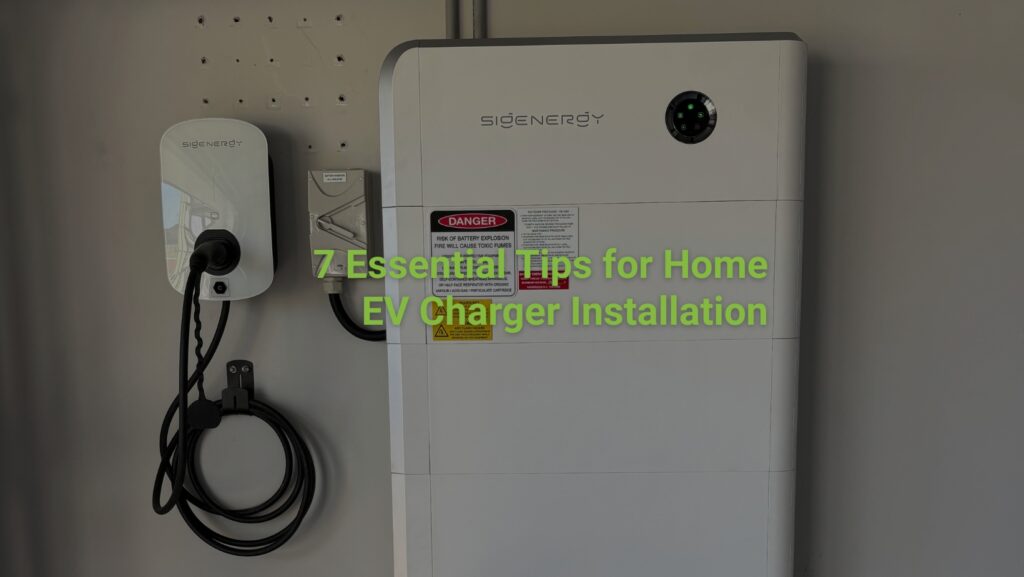
Home EV Charger Installation
Thinking about a home EV charger installation? You’re not alone. With electric vehicles becoming more popular across Brisbane, many homeowners are looking for a safe, fast, and future-proof charging setup.
But before you buy a charger, there are a few critical things to check—because not every home is ready for EV charging straight away.
This guide covers everything you need to know to avoid costly mistakes and ensure your installation is done right the first time.
Quick Answer: What Do You Need Before Home EV charger installation?
Before buying an EV charger, check:
- Your switchboard capacity
- Whether you have single-phase or three-phase power
- The best installation location
- Compatibility with solar or load management
- Installation costs and electrical requirements
Key Takeaways
- Wall-mounted chargers are faster and safer than standard power points
- Your home’s electrical system determines charging speed
- Switchboard upgrades are sometimes required
- Proper placement improves convenience and reduces costs
- Professional installation ensures compliance and safety
Charger Types: Portable vs Wall-Mounted
Choosing the right type of charger is your first big decision.
Portable Chargers (Level 1 or Basic Level 2)
- Plug into a standard power outlet
- Lower upfront cost
- Slow charging (often 8–20+ hours)
- Good for occasional use
Wall-Mounted Chargers (Dedicated EV Chargers)
- Installed by a licensed electrician
- Much faster charging (4–8 hours typical)
- Safer and more reliable
- Often include smart features (timers, apps, load control)
Bottom line: If you drive daily, a wall-mounted charger is the better long-term investment.
Single vs Three-Phase: What Matters
Your home’s power supply directly affects how fast your EV charges.
Single-Phase Power
- Most common in homes
- Charging speed: ~3.6kW to 7.4kW
- Suitable for overnight charging
Three-Phase Power
- Available in some newer or upgraded homes
- Charging speed: up to 11kW or more
- Much faster charging times
Which One Do You Need?
- Daily commuting → single-phase is usually enough
- High usage or multiple EVs → consider three-phase
Upgrading to three-phase can be costly, so it’s important to assess if it’s worth it.
Switchboard Capacity + Safety Devices
Your switchboard is the heart of your home’s electrical system—and it must be able to handle the extra load.
What Needs to Be Checked:
- Available capacity (can it support an EV charger?)
- Existing circuits and load demand
- Safety switches (RCDs) and circuit breakers
Common Upgrades:
- Installing a dedicated circuit for the charger
- Adding or upgrading safety switches
- Full switchboard upgrade (older homes)
⚠️ EV chargers draw significant power—incorrect setup can lead to overheating or electrical hazards.
👉 See how we help homeowners here: /what-we-do/
Best Charger Location (Weather, Cable Run, Convenience)
Where you install your charger affects both usability and installation cost.
Ideal Placement:
- Close to where you park your car
- Protected from weather (garage or covered area)
- Near the switchboard to reduce cable length
Things to Consider:
- Cable reach to your vehicle port
- Future vehicle changes
- Wall space and mounting surface
Long cable runs can increase installation costs significantly.
Load Management + Solar Integration
Modern EV charging isn’t just about plugging in—it’s about smart energy use.
Load Management
Prevents your home from overloading by balancing power between appliances and your charger.
Benefits:
- Avoids tripping circuits
- No need for major upgrades in some cases
Solar Integration
If you have solar panels:
- Charge your EV using excess solar energy
- Reduce electricity bills
- Increase energy efficiency
Smart chargers can automatically prioritize solar charging.
Typical Installation Cost Drivers
EV charger installation costs can vary widely depending on your home setup.
Key Cost Factors:
- Distance from switchboard
- Switchboard upgrades required
- Single vs three-phase setup
- Charger type and brand
- Installation complexity (walls, ceilings, conduits)
General Guide (Australia):
- Basic installation: $800–$2,000+
- With upgrades: $2,000–$5,000+
Getting a proper assessment is the best way to avoid surprises.
What to Ask Your Electrician
Before installing an EV charger, ask these important questions:
- Is my switchboard capable of handling an EV charger?
- Do I need a dedicated circuit?
- Would load management reduce upgrade costs?
- Is my home suitable for three-phase power?
- What charger models do you recommend?
- Can this system integrate with solar?
A good electrician will walk you through all options—not just install the charger.
FAQs
Can I charge from a normal power point?
Yes—but it’s very slow and not ideal for daily use. It may also pose safety risks if not properly assessed.
Do I need a switchboard upgrade for an EV charger?
Not always. It depends on your existing capacity. However, older homes often require upgrades.
Can an EV charger work with solar?
Yes. Many modern chargers integrate with solar systems to maximize energy savings.
How long does installation take?
Most installations take 2–6 hours, but complex setups or upgrades may take longer.
Conclusion
Installing an EV charger at home is one of the best upgrades you can make—but only if it’s done properly.
From choosing the right charger to ensuring your electrical system can handle it, planning ahead will save you time, money, and stress.
Get a Home EV Charger Quote
Ready to install your EV charger the right way?
We’ll assess your home and recommend the safest, future-proof option.
👉 Contact us today: /contact-us/